In the vast tapestry of global music, a particular thread weaves through the misty fjords and ancient forests of the North, drawing listeners into a realm where time seems to stand still. Nordic dark folk, with its haunting melodies and sparse instrumentation, has emerged not merely as a genre but as a profound auditory journey into the soul of Scandinavia’s mystical past. It is here, in the interplay of silence and sound, that one begins to sense the whispers of shamanic traditions—a spiritual undercurrent that gives this music its eerie, transformative power.
The origins of Nordic dark folk are deeply rooted in the cultural and historical soil of the region. Unlike its more celebratory counterparts in traditional folk music, this genre embraces the darker, more introspective aspects of Northern life: the long, oppressive winters, the isolation of remote villages, and the timeless myths that speak of spirits, ancestors, and the thin veil between worlds. Artists often draw upon ancient poetic forms, such as the Norse eddic and skaldic traditions, weaving lyrics that are as much incantations as they are songs. The music does not seek to entertain in the conventional sense; rather, it aims to evoke, to transport, to reconnect the listener with a primordial consciousness that modernity has largely forgotten.
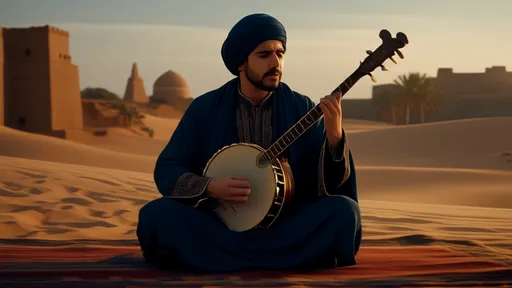
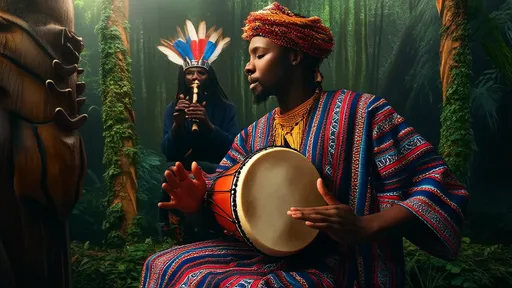
At the heart of this musical expression lies a minimalist aesthetic—a deliberate stripping away of excess that paradoxically creates a rich, immersive experience. Instruments are chosen for their texture and resonance rather than their complexity: the deep, mournful bowing of the nyckelharpa, the ethereal strains of the talharpa, the sparse plucking of acoustic guitars, and the occasional, almost ceremonial use of drums. Vocals are often delivered in a clear, unwavering tone, sometimes echoing the style of traditional kulning (herding calls), but more frequently adopting a meditative, chant-like quality. This austerity is not emptiness; it is a sacred space, an invitation to introspection where every note, every pause, carries weight and intention.
It is within this minimalism that the shamanic elements begin to reveal themselves. Shamanism, in its broadest sense, involves journeying between worlds—mediating between the human and the spiritual, the conscious and the unconscious. Nordic dark folk functions as a modern auditory vessel for this ancient practice. The repetitive, trance-inducing rhythms, the use of natural sounds like wind, water, or animal calls, and the lyrical themes of transformation, death, and rebirth all serve to alter the listener’s state of awareness. The music becomes a ritual, a sonic gateway that allows one to access layers of the psyche typically buried under the noise of everyday life.
Artists such as Wardruna, Heilung, and Forndom have been pivotal in bringing this genre to a wider audience, yet their work remains deeply authentic, often involving meticulous research into historical instruments, languages, and spiritual practices. Einar Selvik of Wardruna, for instance, has spoken extensively about his intention to create music that is “a living tradition,” not a historical reconstruction. His compositions are meant to be felt rather than simply heard, to resonate with the listener’s own inner landscape. Similarly, Heilung describes their performances as “amplified history,” using their art to reconnect people with the spirituality of their ancestors, blurring the lines between concert and ceremony.
The lyrical content in Nordic dark folk is rarely straightforward narrative. Instead, it functions on a symbolic, almost archetypal level. Words are chosen for their sonic properties and their mythic connotations as much as for their meaning. Old Norse, Proto-Germanic, and even reconstructed ancient tongues are employed not for academic exercise but to tap into the vibrational essence of these languages—to speak directly to the subconscious. Themes of nature worship, animism, and the cycles of life and death are prevalent, reflecting a worldview in which humanity is not separate from but an integral part of the natural world. This ecological spirituality resonates strongly in an era of environmental crisis, offering a poignant reminder of a more harmonious way of being.
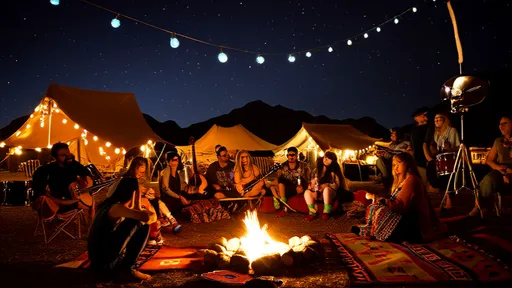
Listening to this music is an active, rather than passive, experience. It demands a certain surrender from the audience. In the absence of dense harmonic structures or catchy hooks, the listener is compelled to project their own emotions, memories, and interpretations onto the sonic canvas. The silence between the notes becomes as significant as the notes themselves, creating a collaborative space where the inner work of the shamanic journey can occur. It is music for contemplation, for walking in ancient woods, for staring into the flames of a fire—a catalyst for personal and collective healing.
The resurgence of interest in Nordic dark folk coincides with a broader cultural yearning for authenticity and spiritual depth in a increasingly digital and disconnected world. It offers an antidote to the overload of information and sensation, providing a stark, beautiful simplicity that feels both ancient and urgently contemporary. It is not music that one puts on in the background; it is an event, a ritual, a means of seeking the shamanic power that resides in stillness, in nature, and within ourselves.
Ultimately, Nordic dark folk is more than a genre—it is a pathway. Through its空灵 (ethereal) and极简 (minimalist) nature, it facilitates a return to a state of being where magic is real, where the past is present, and where the soul can speak its truth. It invites us to listen not just with our ears, but with our entire being, to find the shaman’s power not in some distant realm, but in the quiet, dark, and beautiful depths of our own existence.
By /Aug 22, 2025
By /Aug 22, 2025
By /Aug 22, 2025
By /Aug 22, 2025
By /Aug 22, 2025
By /Aug 22, 2025
By /Aug 22, 2025
By /Aug 22, 2025
By /Aug 22, 2025
By /Aug 22, 2025

By /Aug 22, 2025

By /Aug 22, 2025

By /Aug 22, 2025
By /Aug 22, 2025

By /Aug 22, 2025
By /Aug 22, 2025

By /Aug 22, 2025
By /Aug 22, 2025
By /Aug 22, 2025
By /Aug 22, 2025
