In the vast tapestry of human culture, sound serves as one of the most profound and universal threads. It weaves through societies, histories, and ecosystems, carrying stories, emotions, and identities. This auditory journey invites you to traverse the globe through your ears, exploring the rhythmic heartbeats of West Africa and the mystical chants of the Amazon rainforest. These sonic landscapes are not merely background noise; they are living archives of human and natural expression, resonating with the depths of our shared existence.
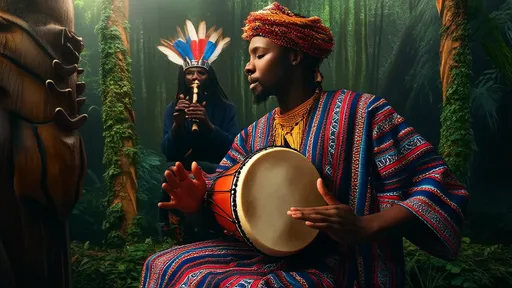
The journey begins in West Africa, where rhythm is not just music but the very pulse of life. Here, the djembe drum speaks a language older than words, its beats echoing the footsteps of ancestors and the cycles of the earth. In communities across Guinea, Mali, and Senegal, drumming is a communal act, a call to gather, celebrate, mourn, and heal. The polyrhythms—layers of simultaneous patterns—create a complex dialogue between drummers, each rhythm telling a part of a larger story. It is in these rhythms that one can hear the history of empires, the resilience of people, and the spiritual connection to the land. The sound of the djembe, with its deep bass and sharp slaps, can transport listeners to vibrant village squares under starlit skies, where dance and music dissolve the boundaries between individual and community.
Moving across the Atlantic, the echoes of West African rhythms have traveled and transformed, influencing diasporic music in the Americas. From the blues and jazz of the United States to the samba of Brazil, these rhythms have adapted, evolved, but never lost their root essence. They are a testament to the endurance of cultural memory, even in the face of displacement and hardship. In the favelas of Rio or the streets of New Orleans, one can still hear the ancestral heartbeat, a reminder that sound can be a vessel of survival and identity.
As we venture into the Amazon rainforest, the soundscape shifts from rhythmic drums to the intricate symphony of nature intertwined with human voice. The Amazon is not a silent wilderness; it is a cacophony of life—howler monkeys roaring, birds singing in countless dialects, insects buzzing in relentless cycles. Within this natural orchestra, indigenous communities have developed chants and spells that are as much a part of the ecosystem as the rivers and trees. These chants, often performed by shamans or elders, are not mere songs; they are sonic rituals designed to communicate with the forest, to heal, to hunt, and to narrate myths that bind the community to their environment.
The chants of the Amazon are characterized by their repetitive, hypnotic quality, using few words but profound vocal variations—guttural lows, whispery highs, and mimicry of animal calls. For instance, the healing icaros of the Shipibo-Konibo people are learned through diets and visions, believed to carry the power of plant spirits. When sung, these icaros create a soundscape that alters consciousness, facilitating physical and spiritual healing. Similarly, the hunting chants of the Yanomami mimic the sounds of prey and predator, a sonic camouflage that blurs the line between human and animal. In these traditions, sound is a tool for coexistence, a way to maintain balance in one of the most biodiverse places on Earth.
What connects the rhythms of West Africa to the chants of the Amazon is the deep, intrinsic belief that sound is alive and agentive. In both cultures, sound is not passive; it does something. It invokes spirits, marks time, tells histories, and transforms realities. The djembe drum can call forth deities in a West African ceremony, just as an Amazonian chant can summon rain or appease a forest spirit. This animistic view of sound reflects a worldview where everything is interconnected—where a beat or a note is a thread in the web of life.
Yet, these sonic traditions face threats in the modern world. In West Africa, globalization and urbanization are shifting musical practices, with younger generations sometimes favoring electronic beats over traditional drums. In the Amazon, deforestation and cultural assimilation endanger both the biodiversity and the indigenous knowledge systems that produce these chants. The loss of these sounds would not just be a cultural tragedy; it would be an ecological one, silencing voices that have co-evolved with their environments for millennia.
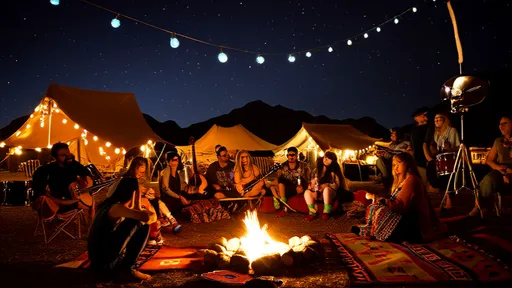
Efforts to preserve these auditory heritages are growing. Ethnomusicologists and cultural activists are recording, documenting, and revitalizing traditional music and chants. Festivals like the Festival au Désert in Mali or cultural exchanges that bring Amazonian shamans to global stages help share these sounds with wider audiences. Moreover, there is a rising appreciation in the wellness and music therapy communities for the healing properties of these ancient sound practices, from drum circles to sonic meditation inspired by forest chants.
This auditory journey from West Africa to the Amazon reveals that sound is a universal language, yet one that speaks in infinitely diverse dialects. It reminds us to listen deeply—not just with our ears, but with our hearts and histories. In the rhythm of a drum, we might hear the resilience of a people; in a rainforest chant, the wisdom of an ecosystem. As the world grows louder with the noise of modernity, these ancient sounds offer a counter-melody of connection, reminding us of the profound ways in which we are all tuned to the same cosmic frequency.
So, close your eyes and listen. Let the beats and chants transport you across continents and into the soul of humanity. In doing so, you become part of this eternal auditory journey, where every sound tells a story, and every story is a note in the great symphony of life.

By /Aug 22, 2025

By /Aug 22, 2025

By /Aug 22, 2025

By /Aug 22, 2025

By /Aug 22, 2025

By /Aug 22, 2025

By /Aug 22, 2025

By /Aug 22, 2025

By /Aug 22, 2025
By /Aug 22, 2025

By /Aug 22, 2025

By /Aug 22, 2025

By /Aug 22, 2025

By /Aug 22, 2025

By /Aug 22, 2025

By /Aug 22, 2025

By /Aug 22, 2025
By /Aug 22, 2025

By /Aug 22, 2025

By /Aug 22, 2025
