In the vast landscape of contemporary music, few genres possess the intellectual rigor and visceral appeal of math rock. Characterized by its use of odd time signatures, complex rhythmic structures, and intricate melodic patterns, math rock challenges conventional notions of what rock music can be. It is a genre where precision meets passion, where calculated complexity gives way to raw emotional expression. To engage with math rock is to participate in a dance—an elegant, cerebral, and deeply physical dance that defies simple categorization and invites listeners into a world of auditory innovation.
The very foundation of math rock lies in its rhythmic sophistication. Unlike most popular music, which relies on steady 4/4 time, math rock frequently employs time signatures such as 7/8, 5/4, 11/8, or even more irregular patterns. This deliberate departure from the norm is not merely an academic exercise; it is a means of creating tension, surprise, and dynamic movement within a composition. The listener is kept perpetually on their toes, never quite able to predict the next rhythmic shift. This unpredictability mirrors the spontaneous yet controlled nature of dance, where each step is both planned and responsive to the music's ebb and flow.
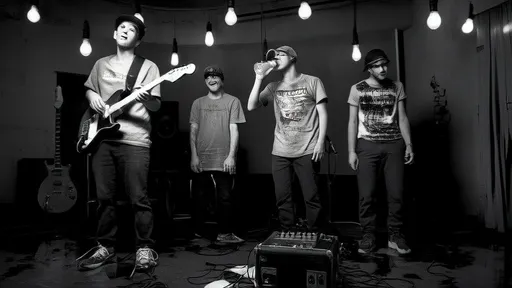
Bands like Battles, Don Caballero, and Hella have mastered the art of weaving these complex rhythms into cohesive, compelling narratives. Their songs often feel like mathematical equations brought to life—each note and rest meticulously placed, yet collectively producing something that feels organic and alive. The guitar work in math rock is particularly noteworthy, frequently featuring tapping, complex fingerpicking, and rapid-fire arpeggios that weave in and out of the rhythm section's intricate patterns. The bass and drums are not mere accompaniments but equal partners in this rhythmic dialogue, providing a foundation that is both solid and constantly shifting.
This musical complexity demands a corresponding level of engagement from the listener. To truly appreciate math rock, one must abandon passive listening and adopt a more active, participatory stance. It is a genre that rewards close attention, revealing new layers and details with each listen. In this sense, listening to math rock becomes a dance of the mind—a cognitive exercise in pattern recognition and anticipation. The brain strives to decode the rhythmic puzzles, to find the underlying logic in the apparent chaos, and in doing so, it experiences a unique form of intellectual pleasure.
But math rock is not solely an intellectual pursuit. Beneath its technical surface lies a profound emotional core. The complexity of the music often serves to amplify its emotional impact, creating moments of catharsis when a particularly convoluted passage resolves into a soaring melody or a driving, anthemic riff. The tension built through irregular time signatures and dissonant harmonies makes these resolutions all the more powerful. It is this combination of head and heart, of calculation and feeling, that makes math rock so compelling. It proves that complexity and accessibility are not mutually exclusive; indeed, they can enhance one another when skillfully combined.
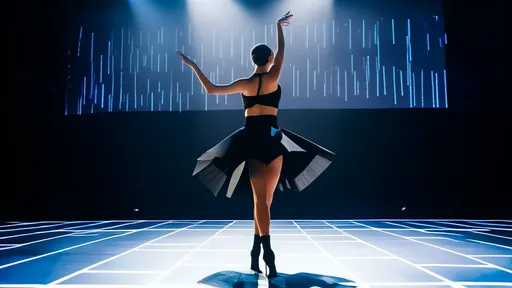
The physicality of math rock cannot be overlooked. Despite its cerebral reputation, this is music that moves the body as much as the mind. The intricate rhythms provoke a physical response—a tap of the foot, a nod of the head, an irresistible urge to move. Dancing to math rock is a challenge, to be sure, but it is also a uniquely liberating experience. Freed from the constraints of a predictable beat, the dancer is invited to interpret the music in their own way, to find their own rhythm within the complexity. It is a dance that values individuality and creativity over conformity, mirroring the genre's own rebellious spirit.
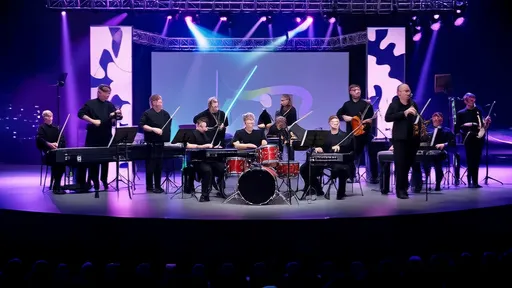
Live performances of math rock are particularly electrifying. Watching musicians navigate these complex compositions with such precision and passion is a spectacle in itself. There is a palpable sense of risk and reward, of musicians operating at the very edge of their abilities. The audience becomes a part of this process, sharing in the tension and release, the concentration and the exhilaration. It is a collective experience, a shared dance between performers and listeners that transcends the traditional boundaries of a concert.
In an era where much popular music is formulaic and predictable, math rock stands as a testament to the enduring power of innovation and experimentation. It draws from a diverse range of influences, including jazz, progressive rock, post-hardcore, and even classical music, yet it synthesizes these elements into something entirely its own. It is a genre that continually evolves, pushing the boundaries of what is possible within the framework of rock music.
Ultimately, math rock is more than just a genre; it is a philosophy. It embodies a belief in the beauty of complexity, the joy of challenge, and the deep connection between intellectual and emotional engagement. To dance to math rock is to embrace these values—to find elegance in intricacy, freedom in discipline, and unity in diversity. It is a dance that invites us all to listen more deeply, think more critically, and feel more profoundly. In the graceful, chaotic, and utterly captivating world of math rock, we discover not just new ways to make music, but new ways to experience it.

By /Aug 22, 2025
By /Aug 22, 2025

By /Aug 22, 2025

By /Aug 22, 2025

By /Aug 22, 2025
By /Aug 22, 2025

By /Aug 22, 2025

By /Aug 22, 2025
By /Aug 22, 2025

By /Aug 22, 2025

By /Aug 22, 2025

By /Aug 22, 2025

By /Aug 22, 2025

By /Aug 22, 2025

By /Aug 22, 2025
By /Aug 22, 2025

By /Aug 22, 2025

By /Aug 22, 2025
By /Aug 22, 2025

By /Aug 22, 2025
