Drivers have long understood that the right music can transform a journey, but few have considered how deeply the very fabric of our commute—the road itself—dictates the rhythm pulsing through our speakers. A fascinating, albeit unofficial, sociological study is playing out on asphalt everywhere, revealing a stark divergence in the sonic landscapes of the open highway and the stifling urban gridlock. This isn't merely about personal taste; it's an unconscious audio response to our environment, a curated soundtrack for motion and stasis, freedom and frustration.
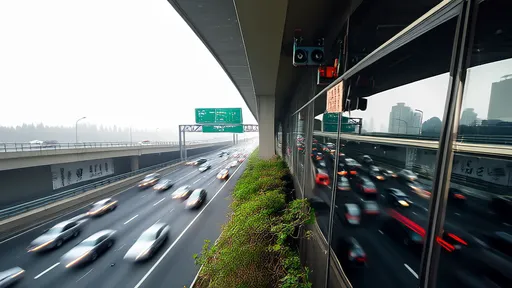
On the boundless stretch of the interstate, a different musical philosophy takes hold. The highway is a realm of potential, a straight shot toward adventure or home. Here, playlists are constructed as the sonic equivalent of a powerful engine and an open throttle. The tempo often increases, mirroring the rising numbers on the speedometer. Genres like classic rock anthems, heartland rock, high-energy pop, and even certain strains of electronic dance music dominate. The goal is amplification—of speed, of freedom, of the journey itself. A song like "Born to Run" isn't just a listen; it's a participation anthem, making the driver the protagonist in their own road movie. The music serves as a co-pilot, combating monotony and fatigue with a relentless, upbeat energy that syncs with the constant, humming vibration of the road. It’s expansive, optimistic, and designed for singing along at the top of your lungs, your voice disappearing into the wind rushing past the windows.
Conversely, the experience of urban congestion demands a completely different audio strategy. Trapped in a metallic box within a motionless or stop-start river of traffic, the driver's needs shift dramatically. The music is no longer an amplifier of external conditions but a buffer against them. The primary function of the "congestion core" playlist is to manage stress, anxiety, and the intense frustration of wasted time. This is where downtempo electronica, ambient soundscapes, mellow indie folk, sophisticated jazz, and curated podcasts find their audience. The tempo drops, the rhythms become more complex or more minimal, and the vocals often softer, more introspective. This music creates a protective bubble, a personalized zone of calm within the chaotic, honking environment outside. It doesn’t seek to emulate the journey but to transform the experience of being stuck into something tolerable, perhaps even productive or mildly contemplative. It’s the audio equivalent of a deep breath.
The creation of these distinct playlists is rarely a conscious, scholarly effort. It is driven by an almost instinctual emotional calibration. During a long highway stint, a driver feeling drowsy or bored will instinctively skip to a more aggressive track. In bumper-to-bumper traffic, a song that feels too loud or frantic will suddenly seem abrasive and will be quickly dismissed. We are, in real-time, using our music libraries as tools to regulate our psyche, to align our internal state with—or protect it from—the external world we're navigating. This curatorial process reveals a profound intimacy with our own emotional responses to different driving conditions.
Technology has become the ultimate enabler of this sonic sociology. Streaming algorithms, far from being coldly impersonal, have grown adept at learning these contextual nuances. Spotify, Apple Music, and YouTube Music don't just suggest "driving playlists"; they can effectively suggest "open road" playlists versus "stressful commute" playlists based on time of day, average speed, and even the user's skipping patterns. A playlist called "Energy Boost" is algorithmically destined for the highway, while "Chill Vibes" is funneled toward the urban crawl. This data-driven mirroring of our behavior shows that the pattern is not just anecdotal; it's measurable, significant, and being catered to by a multi-billion dollar industry.
This divergence in automotive audio reveals a deeper truth about music's role in modern life. It is far more than entertainment; it is a functional tool for environmental adaptation. On the highway, we use it to project ourselves into a narrative of freedom and power. In congestion, we use it as a shield, crafting a sanctuary of calm within a public space of tension. Our curated playlists are direct reflections of not only who we are but what we are enduring physically and emotionally at that very moment. They are the unspoken soundtracks to our daily struggles and triumphs, a personal score that turns the mundane act of driving into a rich, complex human experience.
So, the next time you plug your phone into the car, take a moment to consider the road ahead. Your choice of music will likely be the first and most personal response you have to it. Whether seeking the anthemic thrill of the open road or the serene solace for a gridlocked maze, your playlist is more than a collection of songs—it's your co-pilot, your therapist, and your shield, all orchestrated by the sociology of the street itself.

By /Aug 22, 2025
By /Aug 22, 2025

By /Aug 22, 2025

By /Aug 22, 2025

By /Aug 22, 2025
By /Aug 22, 2025
By /Aug 22, 2025

By /Aug 22, 2025

By /Aug 22, 2025

By /Aug 22, 2025

By /Aug 22, 2025

By /Aug 22, 2025
By /Aug 22, 2025
By /Aug 22, 2025

By /Aug 22, 2025

By /Aug 22, 2025

By /Aug 22, 2025

By /Aug 22, 2025
By /Aug 22, 2025

By /Aug 22, 2025
