The world of gemology is undergoing a quiet revolution as artificial intelligence steps into the realm of pearl authentication. For centuries, the assessment of pearls—particularly their intricate internal structures—has relied on the trained eyes of experts peering through loupes or X-ray machines. Now, a groundbreaking fusion of radiographic imaging and machine learning is rewriting the rules of pearl evaluation, offering unprecedented precision in detecting the telltale "nuclear lines" that distinguish natural from cultured specimens.
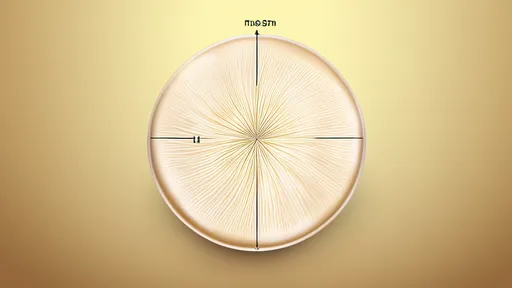
At the heart of this transformation lies the subtle but distinctive nuclear pattern found within saltwater pearls. When subjected to X-ray examination, natural pearls reveal concentric growth layers resembling tree rings, while cultured pearls display a sharp demarcation where the human-implanted nucleus meets subsequent nacre deposits. Traditional analysis required gemologists to interpret these faint radiographic shadows through years of accumulated experience. The new AI systems, trained on tens of thousands of pearl X-rays, can now identify these patterns with superhuman consistency—spotting microscopic features even veteran professionals might overlook.
The technology's breakthrough comes from its ability to quantify what was previously qualitative. Where human graders might describe nuclear lines as "faint" or "pronounced," the algorithm measures precise density gradients across hundreds of radial points. This numerical approach eliminates the subjectivity that has long plagued pearl grading, particularly when examining rare specimens where the difference between natural and cultured could mean a hundredfold variation in value. Early adopters report the system detecting minute organic structures around nuclei that indicate natural formation—details often missed during rushed commercial inspections.
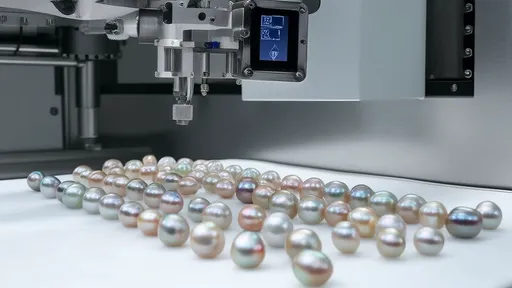
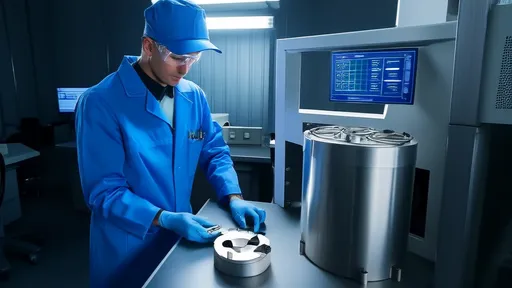
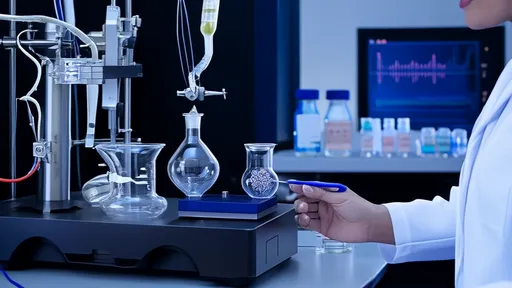
Laboratories across Asia's pearl trading hubs have begun implementing these systems not as replacements for human experts, but as collaborative tools. The AI generates a preliminary analysis highlighting areas of interest on the X-ray, allowing gemologists to focus their scrutiny where it matters most. This symbiosis has proven particularly valuable for keshi pearls—those mysterious, nucleus-free formations that have long defied easy classification. The algorithms can trace the irregular organic centers of genuine keshi pearls versus the telltale voids left by dissolved nuclei in cultured specimens attempting to masquerade as natural.
Beyond authentication, the technology is revealing unexpected insights into pearl formation. By comparing nuclear patterns across harvest locations, researchers have identified previously unnoticed regional signatures in how nacre deposits form around irritants. Malaysian pearls, for instance, show a distinctive "wave-like" nuclear boundary absent in Japanese Akoya specimens. Such discoveries are reshaping our understanding of marine environments' influence on biomineralization processes—with potential implications for both conservation efforts and cultured pearl cultivation techniques.
The implementation hasn't been without challenges. Early versions of the AI sometimes misinterpreted conchiolin deposits—natural organic layers within pearls—as evidence of human intervention. Refining the algorithms required feeding them examples of these false positives until they learned to distinguish between biological variations and genuine nuclear boundaries. There's also the ongoing battle against sophisticated pearl treatments designed to fool both machines and humans; certain bleaching and filling techniques can obscure nuclear lines, prompting developers to train the AI on intentionally altered specimens.
As the technology matures, its applications are expanding beyond luxury markets. Marine biologists are employing adapted versions to study pearl formation in endangered mollusk populations, while customs agencies use portable AI systems to intercept mislabeled shipments. Perhaps most intriguingly, auction houses report that providing AI-generated structural maps alongside physical pearls has become a powerful tool for building buyer confidence in high-stakes transactions where provenance doubts could suppress prices by 30% or more.
The pearl industry's embrace of this technology reflects a broader trend where ancient craftsmanship meets cutting-edge computation. Where Renaissance gem merchants might have judged pearls by holding them to sunlight, today's dealers supplement their tactile expertise with algorithmic verification. This marriage of tradition and innovation promises not just more secure transactions, but deeper scientific understanding of one of nature's most exquisite creations—layer by microscopic layer.
By /Aug 19, 2025
By /Aug 19, 2025
By /Aug 19, 2025
By /Aug 19, 2025
By /Aug 19, 2025

By /Aug 19, 2025
By /Aug 19, 2025
By /Aug 19, 2025

By /Aug 19, 2025
By /Aug 19, 2025

By /Aug 19, 2025
By /Aug 19, 2025
By /Aug 19, 2025
By /Aug 19, 2025
By /Aug 19, 2025
By /Aug 19, 2025
By /Aug 19, 2025
By /Aug 19, 2025
By /Aug 19, 2025
By /Aug 19, 2025
